Ethical and Holistic Approaches to Evaluating Well-being & Mental Health
24 May 2026
Research involving human participants requires careful ethical consideration, particularly when working with individuals experiencing vulnerability, illness, or mental health challenges. In such contexts, researchers have a responsibility not only to ensure participant safety, confidentiality, and informed consent, but also to approach evaluation in a manner that respects the complexity and dignity of participants’ lived experiences (Clark, 2017). Therefore, adopting a fully rounded research approach to evaluating wellbeing and mental health is not simply beneficial, but essential. The six-week long HeppCare trial Akumen Labs conducted in 2023, which explored whether engagement in a circus-based mental health initiative could help alleviate symptoms associated with low to medium levels of depression and anxiety, exemplifies this approach.
Within the HeppCare trial, we adopted a variety of methods in order to evaluate the complexity of participants' lived experiences. Within this specific context of mental health, simply relying on a single medical or clinical assessment tool risks reducing participants to medical categories or diagnostic entities, overlooking the broader emotional, social, and experiential dimensions of wellbeing (Ivankova, 2017). For this reason, during the HeppCare Trial, we supplemented quantitative medical assessments with additional qualitative and observational tools capable of capturing participants’ experiences in a more nuanced and human-centred manner.
5 key measures taken to evaluate Well-being & Mental Health during the HeppCare Trial
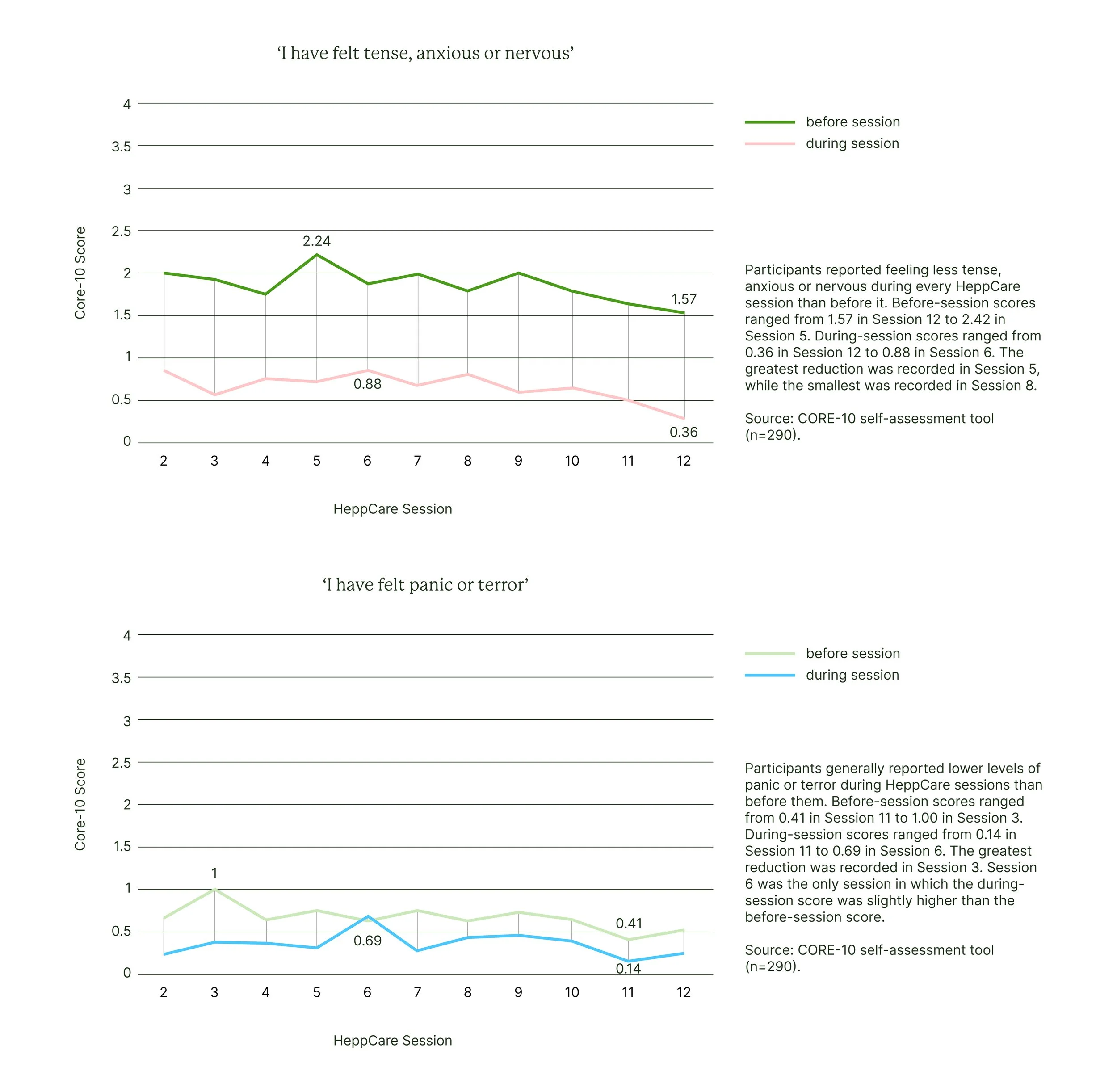
One of the primary assessment tools used was the Core-10 self-assessment tool, a brief self-report screening measure designed to assess the severity of common mental health difficulties, including depression, anxiety, and stress. The CORE-10 consists of ten questions in which participants rate the extent to which they have experienced particular emotional or behavioural symptoms over the previous week using a five-point scale ranging from “not at all” to “extremely.” Participants completed the assessment following each session, reflecting both on how they had felt during the previous week and on their emotional state during the session itself. The tool provided a structured way of monitoring changes in mental health symptoms over time while remaining relatively accessible and non-invasive for participants.
Figure 1: Graphs visualising the changing Core-10 self-assessment scores over the course of the 12 HeppCare sessions
Note: taken from the HeppCare Programme Trial Report (2023)
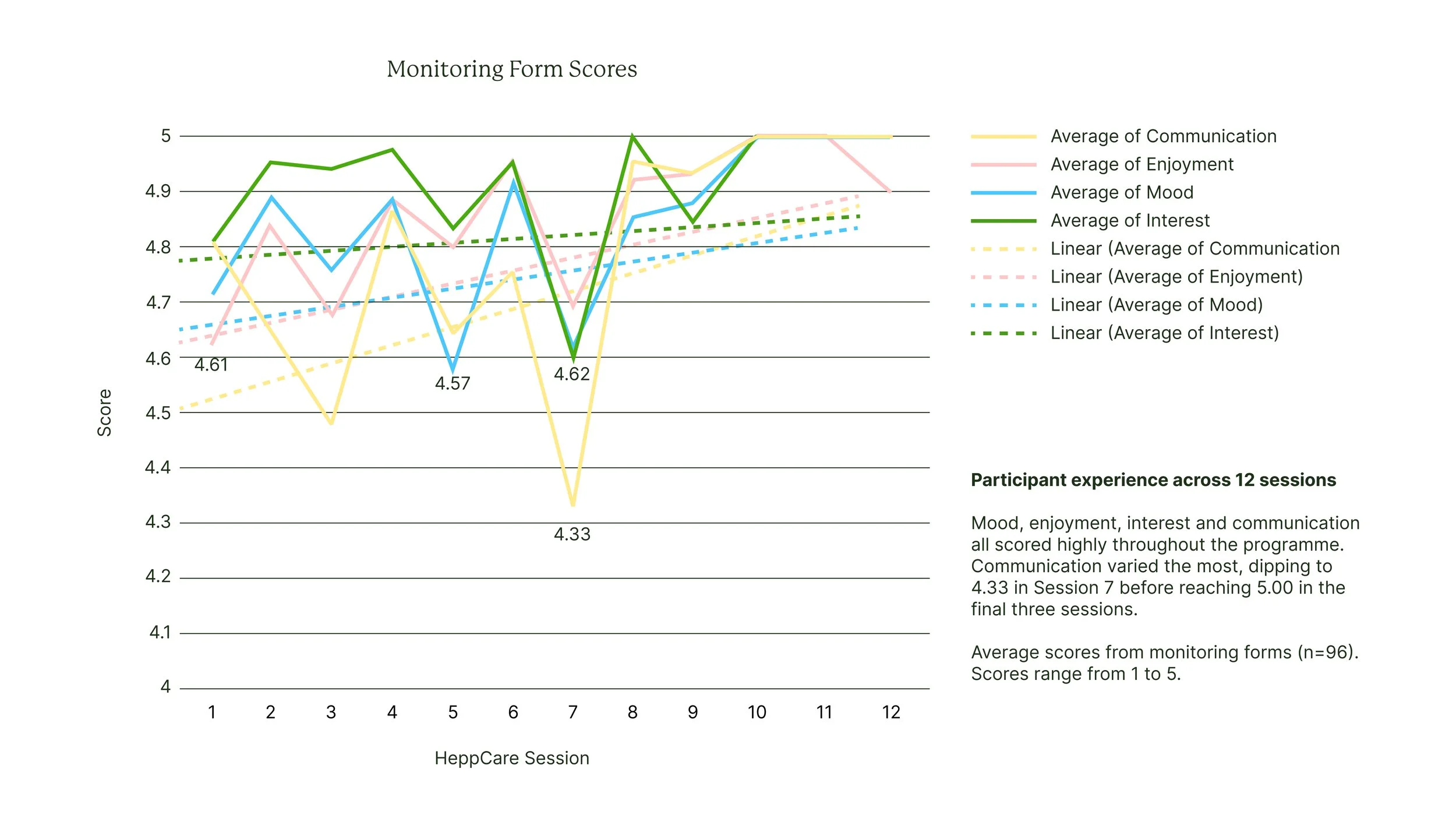
In addition to the CORE-10, monitoring forms were employed by occupational therapists throughout the programme. Monitoring forms are evaluative tools commonly used within occupational therapy to assess clients’ functional abilities and monitor progress over time. In the HeppCare trial, the forms focused on four domains: mood, interest, communication, and enjoyment. During each session, occupational therapists observed participants and rated these areas on a scale from one to five. These observations enabled the establishment of baseline measures, facilitated the tracking of changes throughout the programme, and supported the evaluation of the initiative’s effectiveness from a behavioural and interpersonal perspective.
Figure 2: Average scores of the Monitoring Forms over the 12 HeppCare sessions
Note: taken from the HeppCare Programme Trial Report (2023)
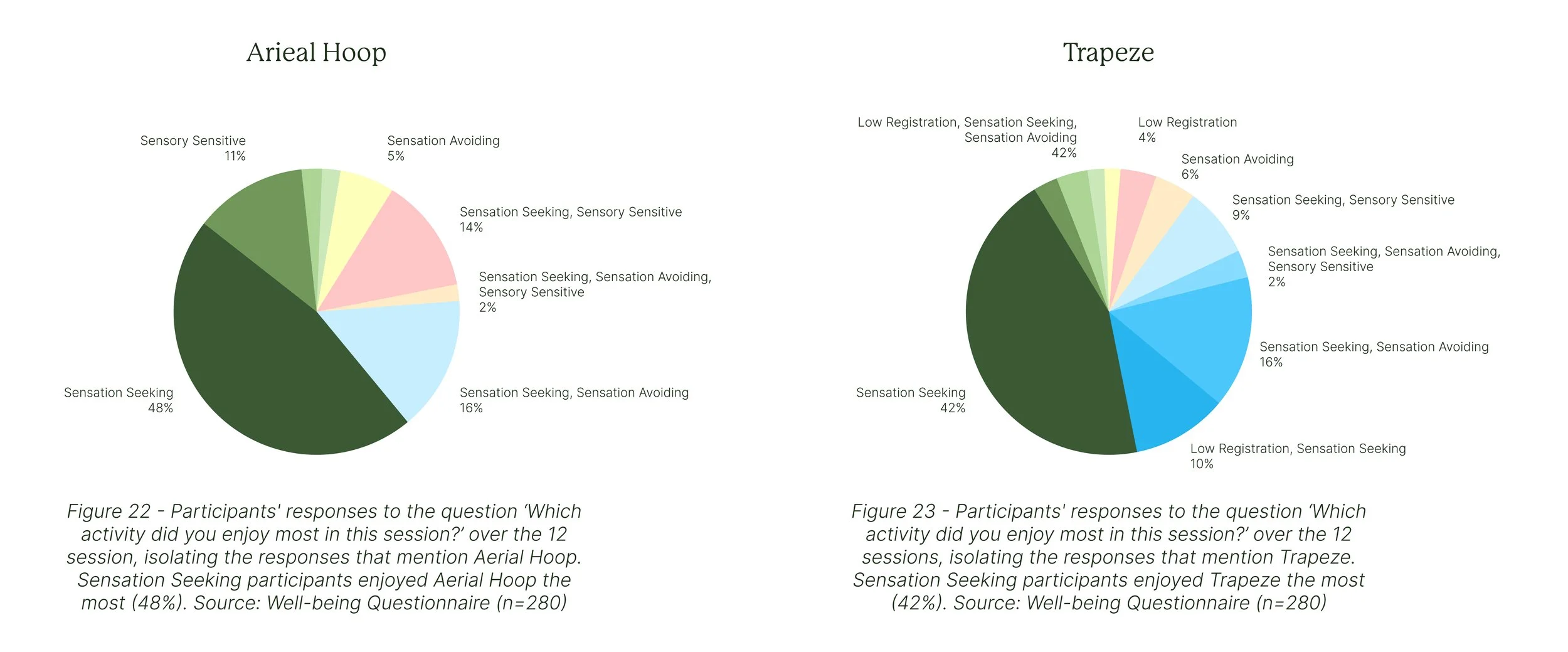
The trial also incorporated sensory preference evaluations. Sensory preference assessments are designed to identify an individual’s sensory processing preferences and sensitivities, recognising that participants may respond differently to sensory stimuli within group or movement-based environments. During the first session, participants completed a sensory preference questionnaire, which was subsequently analysed by occupational therapists. The findings were then shared with participants prior to the second session. This process not only supported participant self-awareness but also enabled facilitators to create a more responsive, inclusive, and psychologically safe environment tailored to individual needs (Brown et al., 2020).
Figure 3: Pie charts visualising people with diverse sensory preferences enjoy different things
Note: taken from the HeppCare Programme Trial Report (2023)
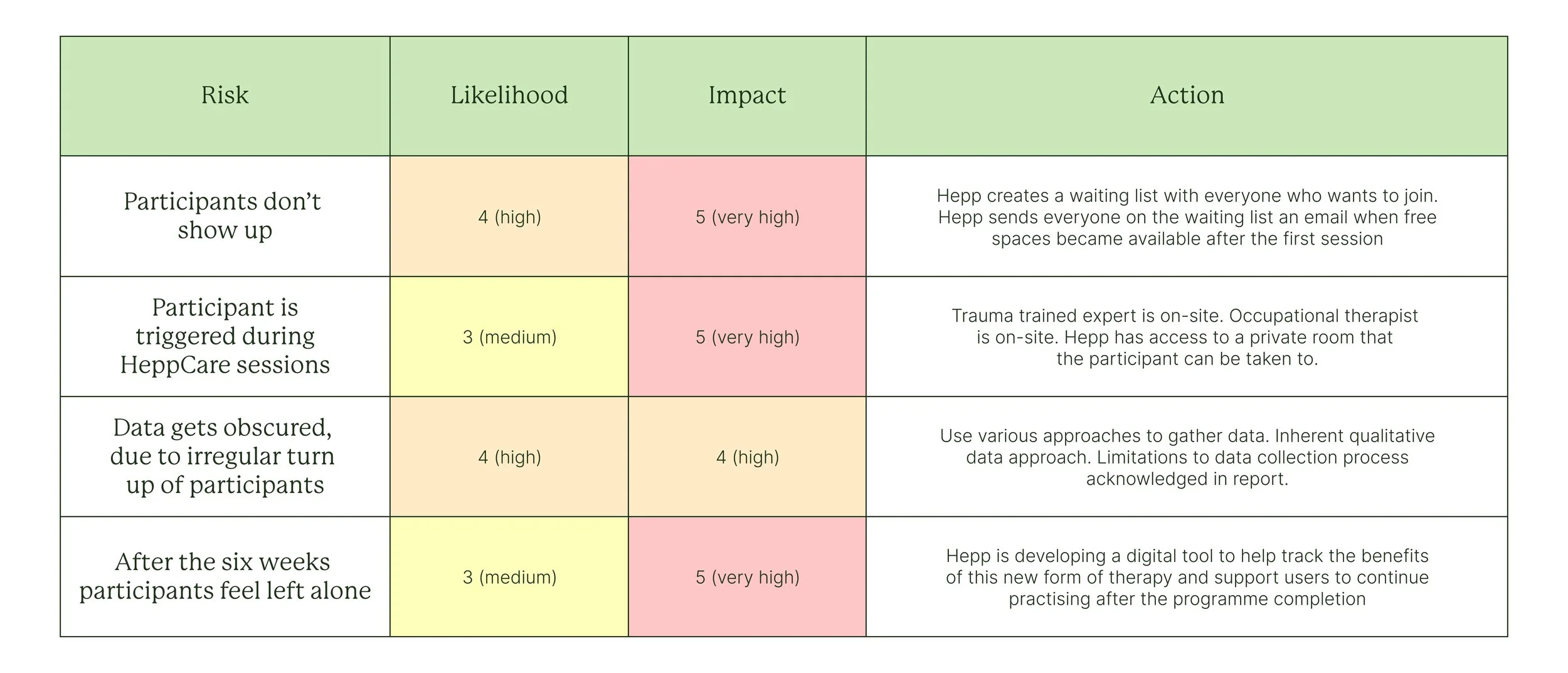
Beyond the selection of assessment tools, the manner in which participants are treated throughout the research process is equally significant. Respectful communication, emotional sensitivity, and the creation of a supportive environment are fundamental when conducting research with individuals experiencing mental health difficulties. Nikidehaghani et al. (2023) have previously pointed out the importance of adopting a continual reflective approach and considering team dynamics before and during research implementation is essential when working with vulnerable participants. Hence, a risk management table was developed for the HeppCare trial prior to commencing the research in order to continuously reflect on potential risks and mitigation strategies to keep participants safe (see Figure 4). A risk management framework enables researchers to systematically identify potential risks, categorise them according to likelihood and potential impact, and establish preventative or responsive actions for each identified risk. In mental health-related research, risks may include emotional distress, participant withdrawal, interpersonal conflict, physical injury during movement activities, or breaches of confidentiality. Anticipating such risks in advance allows researchers and facilitators to respond appropriately and contributes significantly to participant safety and ethical accountability.
Figure 4: Risk management table for the HeppCare Trial
Note: taken from the HeppCare Programme Trial Report (2023)
Finally, a rigorous ethics section is essential within any study involving vulnerable people (Clark, 2017). Ethical considerations should include informed consent procedures, confidentiality measures, data protection strategies, safeguarding protocols, and the anonymisation of participant interviews and testimonies. In the HeppCare trial, anonymised interviews formed an important component of ensuring that participants could share their experiences openly while maintaining privacy and dignity. Ethical rigour not only protects participants but also strengthens the integrity, credibility, and trustworthiness of the research itself.
In summary, the integration of medical assessments, observational tools, sensory evaluations, and reflective qualitative methods enabled a holistic approach to understanding participants’ experiences while avoiding an overly clinical or reductive interpretation of mental health in the HeppCare trial. Equally, the emphasis placed on ethical practice, participant care, risk management, and confidentiality reinforced the importance of conducting research that prioritises both human dignity and methodological integrity. These learnings may offer valuable guidance for future community-based mental health and wellbeing initiatives seeking to evaluate social and therapeutic impact in an ethically responsible and person-centred manner.
References
Clark, L. (2017). Ethics of working with vulnerable populations. In J. Matthes, C. S. Davis, & R. F. Potter (Eds.), The international encyclopedia of communication research methods. https://doi.org/10.1002/9781118901731.iecrm0087
Fehr, R. (2023). HeppCare Programme Trial. NCCA London. United Kingdom
Ivankova, N. V. (2017). Applying mixed methods in community-based participatory action research: A framework for engaging stakeholders with research as a means for promoting patient-centeredness. Journal of Research in Nursing, 22(4), 282–294. https://doi.org/10.1177/1744987117699655
Brown C, Karim R, Steuter M. (2020). Retrospective Analysis of Studies Examining Sensory Processing Preferences in People With a Psychiatric Condition. American Journal of Occupational Therapy. 74(4):944-955. doi:10.5014/ajot.2020.038463
Nikidehaghani, M., Hui-Truscott, F., & Cortese, C. (2023). Researching vulnerable participants: The role of critical reflexivity in overcoming methodological challenges. International Journal of Market Research, 65(2-3), 237-258. https://journals.sagepub.com/doi/abs/10.1177/14707853221137467